Pillow materials and sleep comfort
How to Adjust Pillow Loft for a More Comfortable Fit
A pillow’s height can seem like a small detail—until it is wrong. With an adjustable pillow, a few careful changes to the filling may help bring the head, neck, and shoulders into a more comfortable position. The most reliable approach is patient and practical: start with your sleep position, change the loft in small increments, and give each adjustment time.
Published November 1, 2026
A pillow is not simply a soft place to rest the head. It occupies the narrow space between the mattress and the body, where a small difference in height can affect how the neck feels through the night. Too much loft may push the head upward; too little may let it fall toward the mattress. Neither sensation is a universal verdict on a pillow. The answer depends on the sleeper, the mattress, the position, and the way the pillow’s filling responds under pressure.
That is why an adjustable pillow can be useful. Rather than accepting a fixed shape, sleepers can add or remove filling to explore a different height and feel. Kapok pillows are one example: kapok is a light, plant-based fiber traditionally used as stuffing, and some pillows filled with it have a zippered case that allows the fill to be adjusted. The process is straightforward in principle. In practice, a measured hand is better than a dramatic overhaul.
Loft is the pillow’s height when it is in use—not necessarily its height when it is fluffed on the bed. A lofty pillow may compress substantially beneath the head; a denser fill may keep more of its shape. The aim is not to make a pillow look tall or flat. It is to find a height that feels comfortable and helps keep the head in a natural, neutral position in relation to the rest of the body.
What pillow loft means
In bedding, loft describes how much a pillow rises above the mattress. A pillow’s working loft is the height it maintains once a sleeper settles onto it. This distinction matters because two pillows that appear equally full can behave quite differently. One may compress quickly and feel low; another may remain springy and supportive.
Loft is only one part of the fit. The pillow’s firmness, the way the filling shifts, the width of the shoulders, the mattress’s softness, and a person’s preferred sleep position all play a role. A very soft, high pillow may collapse during the night, while a firmer pillow with the same initial height may hold its shape. A useful adjustment therefore considers how the pillow feels under the head, not just how much stuffing is visible inside its cover.
Kapok’s light, airy character can give a pillow a buoyant feel. But no single material guarantees a particular height or level of support. Construction, fill quantity, casing, and the way fibers are distributed all influence performance. Some kapok pillows are adjustable; others are not. Before opening a pillow, check its design and care guidance. A zipper may provide access to the fill, but instructions differ from one pillow to another.
Begin with your sleep position
Sleep position offers a useful starting point, not a prescription. People change positions during the night, and body shape and mattress feel can alter what is comfortable. Still, the position in which you spend much of the night can help you decide whether to begin with more loft or less.
Side sleepers: consider a higher starting point
When lying on your side, the distance between the mattress and the head is influenced by the width of the shoulders and by how much the mattress gives beneath the body. Many side sleepers find that a pillow with more loft helps fill that space. If a pillow is too low, the head may tilt toward the mattress. If it is too high, the head may angle upward. The target is a position that feels balanced rather than forced.
Shoulder width is not the only factor. A soft mattress may allow the shoulder to sink more deeply, reducing the gap the pillow needs to fill. A firmer mattress may keep the shoulder higher and call for a different pillow height. This is one reason a recommendation based only on sleep position can miss the mark. Treat “side sleeper” as a clue, then assess how your own body rests on your own bed.
Back sleepers: look for a middle ground
Back sleepers often begin by exploring a moderate loft—enough to feel supported, but not so much that the chin is pushed toward the chest. If the pillow feels as though it tips the head forward, reducing the fill may be worth testing. If the head seems to fall back or the pillow provides little support, a small increase may feel better.
Comfort should remain the guide. A pillow that keeps the head in a position that feels relaxed is more promising than one that simply matches a generic description of “medium.” As always, repeated discomfort deserves attention beyond bedding adjustments, especially if it is persistent or severe.
Stomach sleepers: a lower profile may be a place to start
Because the head is turned to one side when sleeping on the stomach, a tall pillow can create additional upward lift. Some stomach sleepers therefore prefer a lower profile, or choose to sleep without a conventional pillow beneath the head. Others want a small amount of cushioning. If you sleep mostly on your stomach, removing a little filling at a time can help you explore a flatter feel without making a sudden, irreversible change.
The central idea is simple: position suggests a direction for experimentation; it does not determine the right answer. A pillow should not feel like a device holding the body in place. If it creates pressure, strain, or a persistent sense of awkwardness, reassess the height and the overall setup.
A careful method for adjusting a kapok pillow
The temptation is to unzip an adjustable pillow and remove a large handful of filling at once. Resist it. A substantial change can make it difficult to tell what helped and what did not. Small adjustments produce clearer feedback—and make it easier to return to a previous setting if the pillow feels worse.
- Read the care instructions first. Check whether the pillow is designed to be opened and whether the fill should be handled in a particular way. Some care instructions permit loft adjustment but specify that the pillow core should not be washed. A removable or washable cover does not necessarily mean the filling is washable.
- Set up a tidy work area. Natural loose fibers can be difficult to manage once they escape. Work slowly over a clean, dry surface, and keep a container or clean bag nearby for filling you remove. Avoid doing the adjustment near a fan, open window, or area where the material could scatter.
- Record the starting point. Note how the pillow feels before changing it: high, low, firm, soft, or uneven. If practical, take a simple measurement of its uncompressed height and keep a record of how much fill you remove. This gives you a reference instead of relying on memory.
- Remove a small amount. Take out a modest quantity, close the case securely, and redistribute the remaining filling by gently fluffing the pillow. For many people, making one small change is more useful than trying to perfect the pillow in a single session.
- Test the pillow as you actually sleep. Lie down in your usual position, on your usual mattress. Notice whether the head feels level, whether the neck feels relaxed, and whether the pillow stays comfortable when you shift. A brief test can catch an obviously unsuitable adjustment, but it cannot substitute for a few ordinary nights.
- Repeat only if needed. If the pillow still feels too high after several nights, remove a little more. If it feels too low and the design allows it, add some filling back. The purpose is controlled experimentation—not a race toward the thinnest or fullest pillow.
Keep the zipper closed during use and check that the fill is distributed evenly. A lump on one side can create the impression that the whole pillow has the wrong loft. Gentle redistribution may solve the problem without changing the overall amount of filling.
Give each adjustment time
A pillow can feel unfamiliar after even a modest change. The first night may not settle the question. Sleep varies from one evening to the next, and people may notice a pillow differently depending on fatigue, temperature, or the position they happen to maintain. Allow a few nights to assess an adjustment before making another, unless it is immediately uncomfortable.
During that trial, keep the rest of the setup as consistent as possible. Use the same mattress and pillowcase, and try to compare similar sleep positions. If several variables change at once—new pillow, different mattress, different bedding—it becomes harder to identify what is responsible for a difference in comfort.
A brief note each morning can help. Record whether the pillow felt too high, too low, or about right; whether the fill shifted; and whether the first impression changed as the night went on. This need not become a sleep-science project. A few words may reveal a pattern that is hard to remember after a week.
There is also no obligation to keep adjusting. If the pillow feels comfortable and stable, stop there. “Perfect” can become a moving target. The better result is a dependable fit that lets you rest without spending the night attending to the pillow.
How filling changes the adjustment process
Different pillow fillings respond differently to changes in quantity. Kapok is often described as light and airy, qualities that can create a soft, buoyant impression. Its feel will depend on how much is used and how the pillow is built. Removing some filling may reduce height, but it may also change the way the pillow spreads or compresses. After an adjustment, fluff and redistribute the material before judging the result.
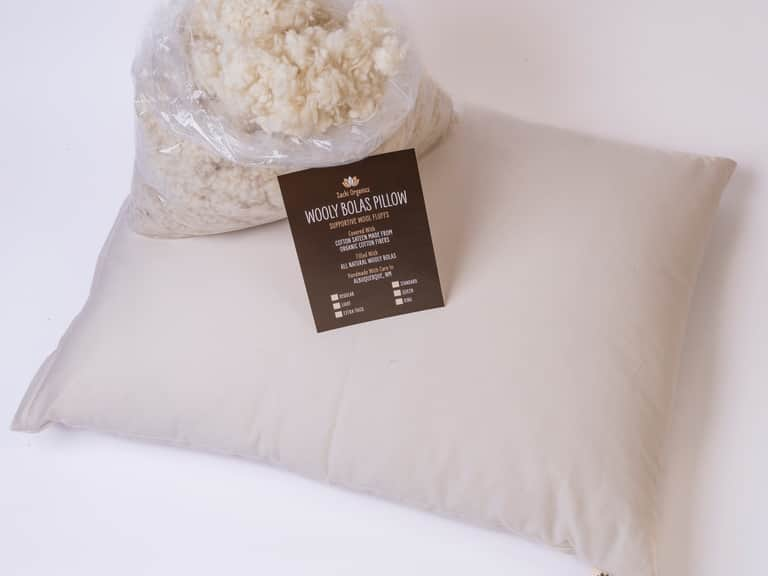
Other natural materials illustrate why “adjustable” is a construction feature rather than a material category. Shredded latex can often be added or removed in pillows designed with an opening, while wool may be supplied as batting, puffs, or clusters. Down and feather pillows can also vary in loft and resilience, but many are not intended for user adjustment. Always check the specific pillow’s instructions instead of assuming that one material behaves like another.
Adjustability can be valuable because it lets a sleeper fine-tune fill volume over time. It is not a guarantee of superior comfort, and it does not make every pillow suitable for every person. A fixed pillow that happens to fit well may be a better choice than an adjustable one that is difficult to care for or uncomfortable in every configuration.
Nor does a natural fiber automatically mean the pillow is washable, hypoallergenic for every person, or free from all possible irritants. Material claims and care requirements vary. Read labels, verify certifications when they matter to you, and pay attention to your own sensitivities. The most useful description is the one supported by the product’s actual construction and care information.
A practical fit check
Once the pillow is adjusted, think about how it feels rather than chasing a number. A comfortable setup generally should not require you to brace your neck or continually fold the pillow into a new shape. When lying in your usual position, consider these questions:
- Does the pillow feel as though it fills the space between your head and the mattress without pushing your head sharply upward?
- Can your neck and shoulders relax, or do you feel as though you are holding a position against the pillow?
- Does the pillow maintain a reasonably even surface after you settle onto it?
- When you change positions, does the pillow remain comfortable enough, or does the fit work only in one posture?
- Is the pillow itself the source of discomfort, or might the mattress, sleeping position, or another factor be involved?
These are observations, not diagnostic tests. They can help structure a pillow adjustment, but they cannot determine the cause of ongoing pain. A pillow may contribute to discomfort without being the only factor. If pain is persistent, worsening, or accompanied by other concerning symptoms, seek guidance from an appropriate health professional rather than relying on bedding changes alone.
Mistakes that make it harder to find the right loft
Changing too much at once. Removing a large quantity can take the pillow from overly lofty to underfilled in one move. Smaller steps make the outcome easier to evaluate and reverse.
Judging by appearance alone. A pillow may look full but compress substantially, or appear modest and feel firm beneath the head. Consider its working height and response under pressure, not only its outline on the bed.
Ignoring the mattress. The pillow does not work in isolation. A plush mattress and a firm mattress position the shoulders differently, which can change the space that a pillow needs to fill.
Forgetting the sleep position changes. A person who starts the night on their side may end up on their back. If the pillow feels comfortable in one position but distinctly wrong in another, consider whether a compromise loft is preferable to optimizing for only one moment.
Washing the filling without checking. Some covers can be washed while the insert must only be spot-cleaned or kept dry. Water, heat, or direct sunlight may affect particular materials. Follow the care label; do not assume that an adjustable pillow can be washed as a whole.
Expecting an instant cure. A pillow adjustment may improve comfort, but it should not be treated as a guaranteed remedy for neck pain, sleep problems, or a medical condition. Loft is one element of the sleep environment, not a substitute for appropriate care.
When an adjustable pillow may not be the answer
Some sleepers may find that the fill shifts, the pillow requires too much maintenance, or the available adjustment range does not suit their needs. Others may prefer a stable, molded shape that does not need periodic fluffing. If you have removed filling and the pillow feels lumpy, difficult to shape, or persistently uncomfortable, consider returning to the original amount if possible and reassessing the pillow’s overall design.
Fit can also depend on pillow size and shape. A standard rectangular pillow, a contoured pillow, and a body pillow serve different purposes. A body pillow may support the arms or legs, while a contour shape may offer a particular profile. Adjusting the loft of a conventional pillow cannot necessarily recreate the support or dimensions of a different design.
Practical matters count, too. If a pillow cannot be cleaned in a way that fits your household routine, or if its care instructions are easy to overlook, it may not be the best long-term choice. A useful pillow is not simply comfortable on the first night. It is one you can maintain safely and consistently.
The small-change principle
The appeal of an adjustable pillow is control. A zipper turns an object that might otherwise be fixed into something more responsive to personal preference. But control works best when it is exercised gradually. Begin with your sleep position, consider the mattress beneath you, and change only a small amount of kapok filling at a time. Then allow a few nights to understand what the change has done.
There is no universal loft that applies to every sleeper, and no filling can guarantee a perfect night. A comfortable fit is a practical balance: enough height to feel supported, not so much that the head feels pushed out of place, and a shape that remains agreeable as the body shifts. The right adjustment may be only a handful of fibers—or none at all.
That modest conclusion is also the most useful one. Start small. Pay attention. Follow the care instructions. When the pillow stops demanding your notice, the search may be over.